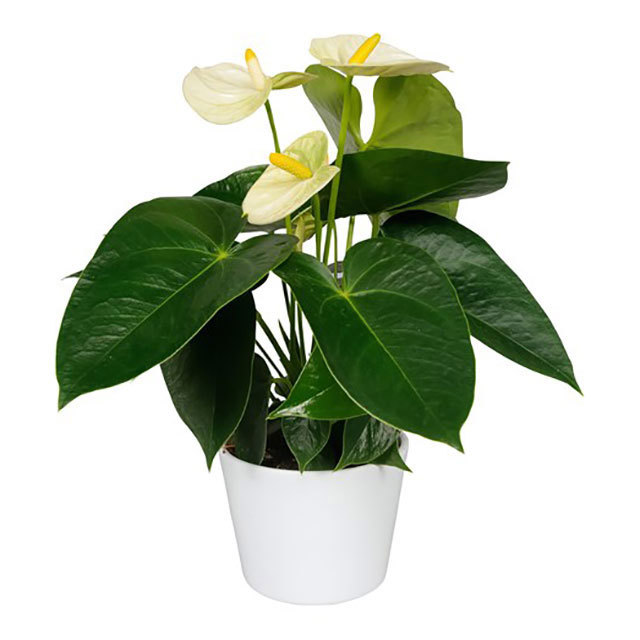
Anthurium andraeanum Bianco Drooping Leaves
eco Drooping Leaves

Anthurium andraeanum Bianco – Drooping Leaves

Why does your Anthurium andraeanum Bianco have drooping leaves? Diagnose the cause and fix it with our step-by-step guide.

search Possible Causes

error

Improper Watering (Underwatering or Overwatering)

Anthuriums require consistent moisture but are highly susceptible to root rot if the medium stays saturated. Drooping is a classic sign of either cellular dehydration from dry soil or oxygen deprivation in waterlogged roots.

Very Common
lightbulb
How to confirm: Stick your finger two inches into the substrate; if it's bone dry, the plant needs water; if it's soaking wet, you have an irrigation issue.
build How to fix it
shopping_cart Recommended Products
1 Check the soil moisture level immediately by inserting a probe into the medium to determine if the plant is suffering from dehydration or waterlogging.
2 If the soil is bone dry, thoroughly water the plant; if the soil is saturated, repot the Anthurium in a well-draining mix containing perlite or orchid bark to prevent root rot.
3 Ensure the plant is in a pot with excellent drainage and use a saucer to prevent the roots from sitting in stagnant water.
error

Temperature or Humidity Shock

White Anthuriums are tropical plants that thrive in high humidity (above 60%). Sudden exposure to cold drafts or very dry indoor air causes the plant to lose turgor pressure, leading to limp leaves.

Very Common
lightbulb
How to confirm: Check if the plant is located near an air conditioning vent, a drafty window, or a heater.
build How to fix it
shopping_cart Recommended Products
1 Increase local humidity by using a pebble tray or a humidifier to maintain levels above 60%.
2 Move the plant away from cold drafts, air conditioning vents, or heating elements to stabilize the temperature.
3 Mist the foliage regularly with a fine spray to provide immediate moisture to the leaves.
warning

Root Rot (Phytophthora or Pythium)

Excessive moisture leads to the decay of the root system, making it impossible for the plant to transport water to the leaves despite the soil being wet. This results in a heavy, drooping appearance.

Common
lightbulb
How to confirm: Gently lift the plant from its pot to inspect if the roots are firm and white or brown, slimy, and foul-smelling.
build How to fix it
shopping_cart Recommended Products
1 Immediately remove the plant from its pot and inspect the roots; trim away any mushy, black, or foul-smelling roots using sterilized shears.
2 Repot the Anthurium in a fresh, well-draining medium enriched with perlite to improve aeration and prevent future waterlogging.
3 Use a moisture meter to monitor the soil regularly, ensuring you only water when the top inch of substrate is dry to avoid further root decay.
warning

Nutrient Deficiency (Nitrogen or Magnesium)

A lack of essential macronutrients prevents the plant from maintaining structural cell wall integrity. This often presents as drooping accompanied by chlorosis (yellowing) in older leaves.

Common
lightbulb
How to confirm: Inspect the leaf color for yellowing patterns and check when you last applied a balanced, water-soluble fertilizer.
build How to fix it
shopping_cart Recommended Products
1 Apply a balanced liquid fertilizer to restore essential nitrogen and magnesium levels to the soil.
2 Check the soil moisture levels with a meter to ensure the drooping isn't actually caused by underwatering or root rot.
3 Supplement with a magnesium-rich additive if yellowing persists on older leaves to strengthen cell walls.

Other Anthurium andraeanum Bianco problems

Your plant might also be experiencing one of these issues:

local_hospital All symptoms eco All plants with drooping leaves
favorite