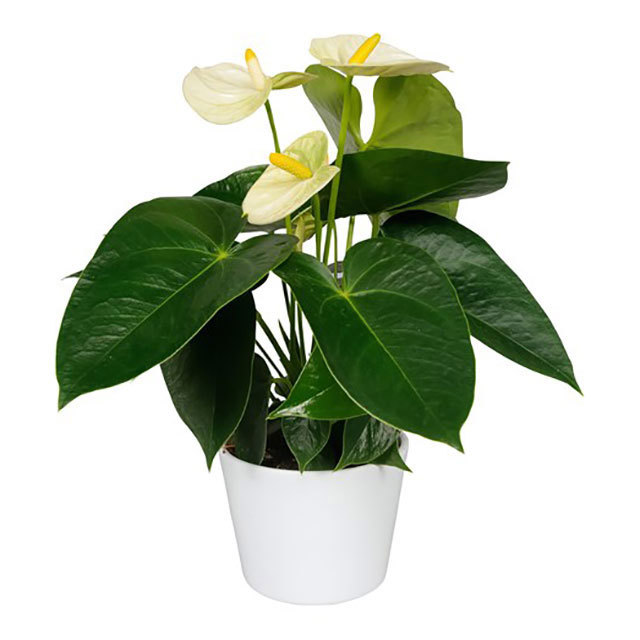
Why does your Anthurium andraeanum Bianco have fine webbing? Diagnose the cause and fix it with our step-by-step guide.
Spider mites thrive in the low humidity often found in indoor environments, producing fine silk webbing to create protective colonies. They feed on the sap of Anthurium leaves, leading to stippling and eventual leaf drop.
While broad mites are too small to see, their feeding activity can cause plant stress that results in secondary webbing or a distorted, 'web-like' appearance of new leaf growth. This is particularly common in controlled greenhouse environments.
In cases of extreme humidity and poor air circulation, certain fungal hyphae can mimic a fine, web-like structure on the leaf surface. This is often accompanied by dark spotting or soft rot on the Anthurium spadix or leaves.
Your plant might also be experiencing one of these issues:

 English
 Italiano