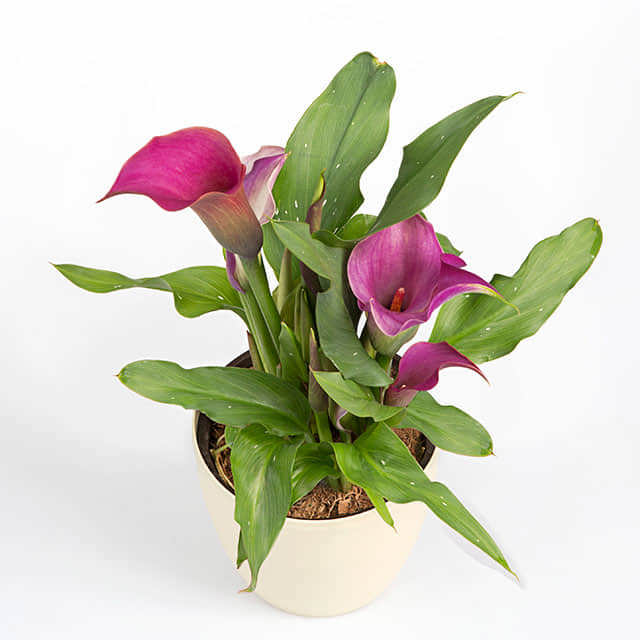
Why does your Red Zantedeschia aethiopica have drooping leaves? Diagnose the cause and fix it with our step-by-step guide.
Calla lilies require consistently moist but well-draining soil; drought stress causes immediate loss of turgor pressure, while waterlogged soil leads to root hypoxia and rot. Both extremes result in the characteristic limp, drooping foliage seen in Red Zantedeschia.
Fungal pathogens attacking the underground rhizome of the Red Zantedeschia prevent the transport of water to the leaves, causing them to wilt even if the soil is wet. This is common in high-humidity environments with poor drainage.
Red Zantedeschia aethiopica is sensitive to temperatures below 55°F (13°C). Sudden drops in temperature cause the cells in the leaves to lose stability, resulting in heavy drooping and potential dark spotting.
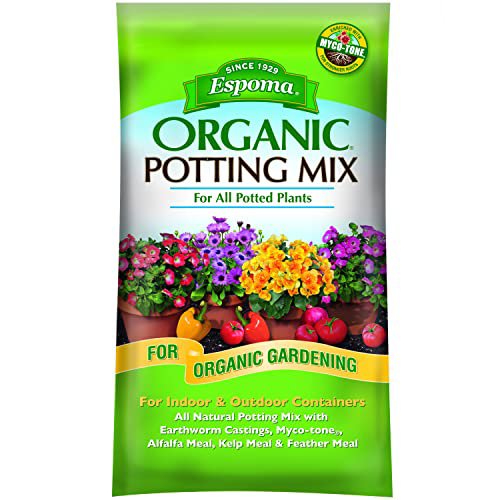
A lack of nitrogen prevents the plant from maintaining structural integrity and chlorophyll production, leading to pale, drooping leaves. This is often seen in long-term indoor plantings where soil nutrients have been depleted.
Your plant might also be experiencing one of these issues:

 English
 Italiano