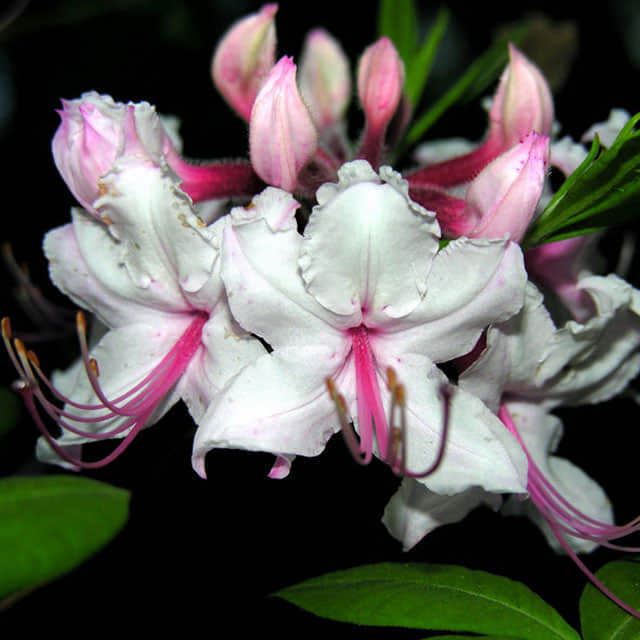
Rhododendron canescens Fine Webbing
eco Fine Webbing

Rhododendron canescens – Fine Webbing

Why does your Rhododendron canescens have fine webbing? Diagnose the cause and fix it with our step-by-step guide.

search Possible Causes

error

Spider Mites (Tetranychidae)

Spider mites thrive in the warm, dry conditions often experienced by Oakleaf Azaleas. They pierce individual leaf cells to suck out contents, leaving behind fine silken webs and stippled white or yellow spots on the foliage.

Very Common
lightbulb
How to confirm: Hold a white piece of paper underneath a leaf and tap it sharply to see if tiny crawling dots fall off.
build How to fix it
shopping_cart Recommended Products
1 Apply an organic miticide or insecticide to the foliage to eliminate existing spider mite populations and destroy eggs.
2 Increase humidity around the plant and ensure the soil remains consistently moist, as spider mites thrive in dry environments.
3 Prune and dispose of heavily infested or dead foliage to prevent the mites from spreading to healthy parts of the plant.
error

Spider Mites (Two-Spotted Spider Mite)

This specific species is highly common on woody shrubs like Rhododendron canescens. The webbing becomes more dense and visible on the undersides of leaves during periods of heat stress.

Very Common
lightbulb
How to confirm: Inspect the undersides of the leaves specifically for small, dark spots within the silk webbing.
build How to fix it
shopping_cart Recommended Products
1 Apply an organic insecticide/miticide spray to the plant, ensuring you thoroughly coat the undersides of the leaves where the webbing is most dense.
2 Increase humidity around the plant and avoid high heat, as spider mites thrive in hot, dry conditions.
3 Monitor soil moisture levels to ensure the plant is not experiencing heat stress, which can trigger mite infestations.
warning

Fall Webworm (Macaria depressa)

While more common in late summer, these caterpillars spin large, dense silk webs that can envelop entire branch tips of azaleas to protect themselves while feeding on the leaves.

Common
lightbulb
How to confirm: Look for larger, thicker clumps of webbing and check for caterpillars inside the silk structures.
build How to fix it
shopping_cart Recommended Products
1 Manually remove and destroy the silk webs and caterpillars from the affected branches to prevent further defoliation.
2 Apply an organic insecticide spray to the plant to target any remaining larvae and prevent a new infestation.
3 For acid-loving plants like Rhododendrons, ensure the soil remains nutrient-rich to help the plant recover from feeding damage.

Other Rhododendron canescens problems

Your plant might also be experiencing one of these issues:

local_hospital All symptoms eco All plants with fine webbing
favorite