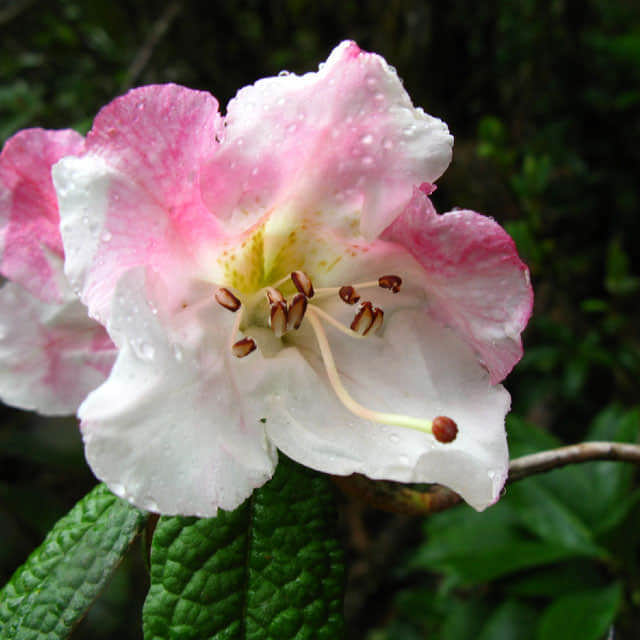
Rhododendron edgeworthii Fine Webbing
eco Fine Webbing

Rhododendron edgeworthii – Fine Webbing

Why does your Rhododendron edgeworthii have fine webbing? Diagnose the cause and fix it with our step-by-step guide.

search Possible Causes

error

Spider Mites (Tetranychidae)

The presence of fine webbing on the undersides of leaves is a classic sign of spider mite infestation, which thrives in hot, dry conditions. These tiny arachnids pierce the plant cells to feed on the sap, leading to stippling and eventual leaf drop.

Very Common
lightbulb
How to confirm: Hold a white piece of paper underneath a branch and tap it to see if tiny specks begin crawling on the paper.
build How to fix it
shopping_cart Recommended Products
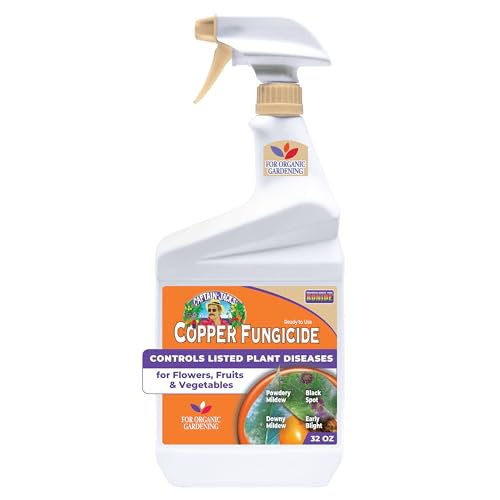
1 Apply an organic miticide or insecticide to the plant, ensuring you spray the undersides of the leaves where the mites and webbing reside.
2 Increase humidity around the plant and avoid hot, dry air, as spider mites thrive in arid environments.
3 Prune and dispose of heavily infested or dead foliage to prevent the mites from spreading to healthy parts of the plant.
warning

Broad Mites ( Eriophyidae)

While less likely to produce extensive silk webs, broad mites cause structural deformities and can contribute to a fine, dusty appearance or secondary webbing from other pests. They specifically target the tender new growth of Rhododendron species.

Common
lightbulb
How to confirm: Inspect new, emerging leaves for abnormal thickening, curling, or a distorted growth pattern.
build How to fix it
shopping_cart Recommended Products
1 Inspect new growth for structural deformities, such as stunted or thickened leaves, and prune away any heavily infested or distorted foliage to reduce mite populations.
2 Apply an organic miticide/insecticide spray to the plant, ensuring thorough coverage of the undersides of leaves and tender new growth to eliminate mites.
3 Monitor the plant's moisture levels to ensure the soil remains consistently moist but well-drained, as stress can make plants more susceptible to infestations.
warning

Secondary Fungal Growth (e.g., Botrytis)

In very high humidity, fine fungal filaments can sometimes be mistaken for webbing, especially if the plant is stressed by spider mites. This typically accompanies decaying organic matter or dead leaf tissue on the Woolly Rhododendron.

Common
lightbulb
How to confirm: Check if the 'webbing' is accompanied by fuzzy, greyish mold growth on dead flower petals or leaves.
build How to fix it
shopping_cart Recommended Products
1 Remove and discard all dead, decaying leaves and organic matter from the base of the plant to eliminate the breeding ground for fungal growth.
2 Apply an organic fungicide spray to treat the fungal filaments and protect healthy plant tissue.
3 Improve air circulation around the plant and reduce humidity levels to prevent further fungal development.

Other Rhododendron edgeworthii problems

Your plant might also be experiencing one of these issues:

local_hospital All symptoms eco All plants with fine webbing
favorite