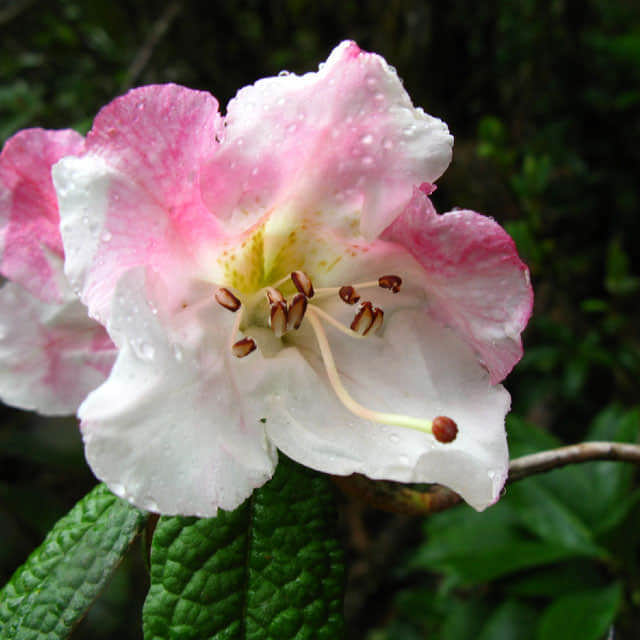
Rhododendron edgeworthii Yellow Leaves
eco Yellow Leaves

Rhododendron edgeworthii – Yellow Leaves

Why does your Rhododendron edgeworthii have yellow leaves? Diagnose the cause and fix it with our step-by-step guide.

search Possible Causes

error

Iron Chlorosis (Nutrient Deficiency)

Rhododendrons are acid-loving plants; if the soil pH rises above 5.5, iron becomes chemically unavailable to the roots. This leads to interveinal chlorosis where leaves turn yellow while veins remain dark green.

Very Common
lightbulb
How to confirm: Check if the new growth is yellowing specifically between the veins while the veins stay green.
build How to fix it
shopping_cart Recommended Products
1 Lower the soil pH to an acidic range (4.5–5.5) to ensure iron availability, as high pH prevents nutrient uptake.
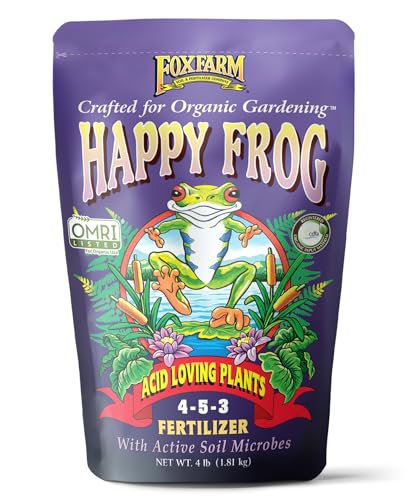
2 Apply an acid-loving plant fertilizer to provide the necessary nutrients for recovery.
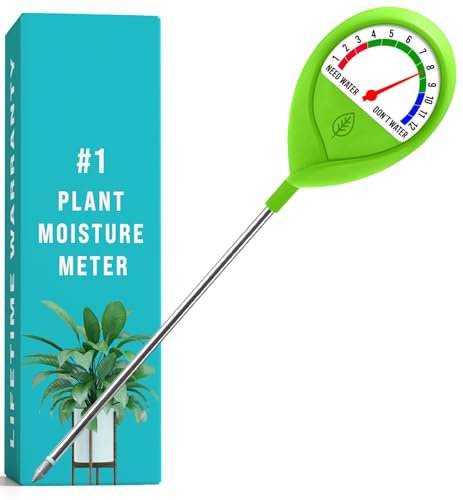
3 Monitor soil moisture levels using a moisture meter to prevent the soil from drying out too much, which can also affect nutrient mobility.
error

Phytophthora Root Rot

Excessive soil moisture or poor drainage causes Phytophthora species to attack the root system of Edgeworthii. This prevents water and nutrient transport, causing a general yellowing and eventual wilting of foliage.

Very Common
lightbulb
How to confirm: Inspect the base of the stems and roots for dark, slimy, or necrotic patches.
build How to fix it
shopping_cart Recommended Products
1 Immediately reduce watering frequency and ensure the plant is in a well-draining environment to stop the spread of Phytophthora.
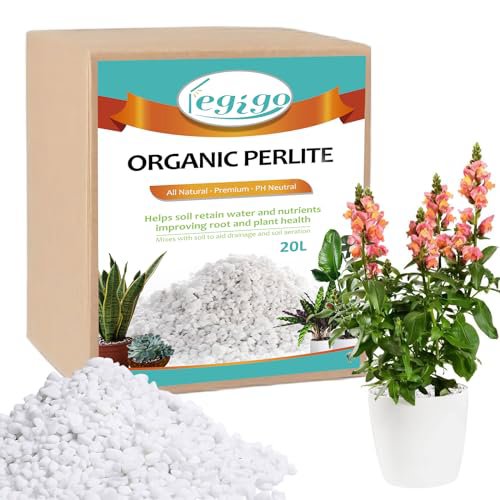
2 Repot the plant in a highly aerated, well-draining medium by mixing in horticultural perlite to prevent future waterlogging.
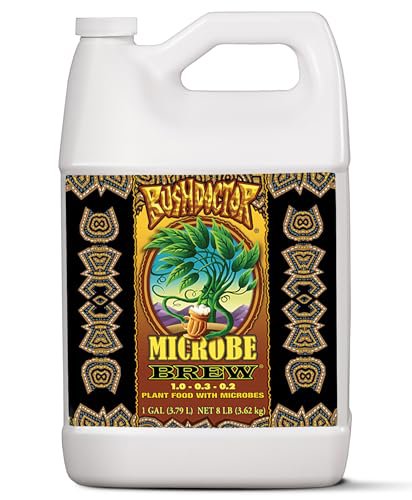
3 Prune away any mushy, darkened, or dead roots and treat the remaining healthy root system with a microbial inoculant to boost resilience.
warning

Water Stress (Drought/Underwatering)

While Edgeworthii is somewhat hardy, prolonged dry periods cause the plant to sacrifice older foliage to conserve moisture. This results in a gradual yellowing of the outer leaves followed by leaf drop.

Common
lightbulb
How to confirm: Check the moisture level 2-3 inches below the soil surface during dry spells.
build How to fix it
shopping_cart Recommended Products
1 Check the soil moisture level immediately using a moisture meter to confirm if the root zone is completely dry.
2 Apply a deep, thorough watering to the base of the plant, ensuring the soil is fully saturated to reach the deep root system.
3 Apply a mulch layer around the base of the plant to help retain soil moisture and prevent future drought stress.
warning

Nitrogen Deficiency

A lack of nitrogen in the growing medium prevents the production of chlorophyll. Unlike iron chlorosis, nitrogen deficiency typically causes the entire leaf to turn a uniform pale yellow, starting with older leaves.

Common
lightbulb
How to confirm: Observe if the yellowing is uniform across the whole leaf rather than just between veins.
build How to fix it
shopping_cart Recommended Products
1 Apply a nitrogen-rich organic fertilizer to the soil to restore chlorophyll production and green up the older leaves.
2 Supplement the soil with organic worm castings to provide a slow-release source of nitrogen and beneficial microbes.
3 Ensure the plant is in acidic soil, as Rhododendrons require a low pH to effectively uptake nutrients like nitrogen.

Other Rhododendron edgeworthii problems

Your plant might also be experiencing one of these issues:

local_hospital All symptoms eco All plants with yellow leaves
favorite