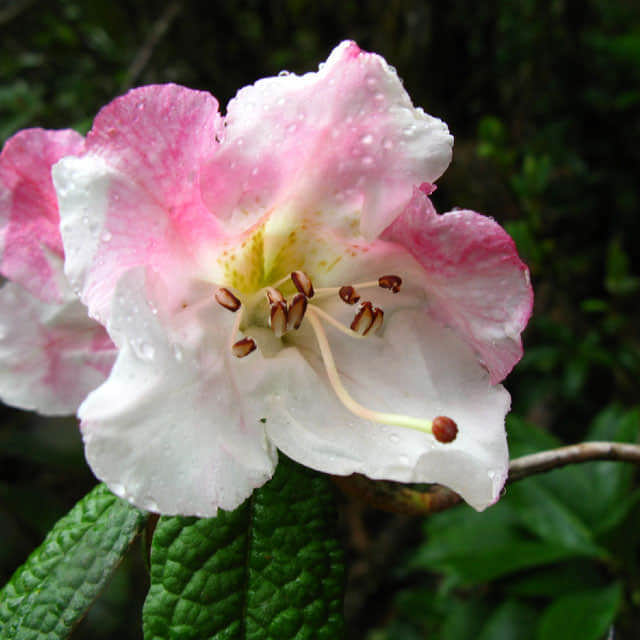
Rhododendron edgeworthii White Powder
eco White Powder

Rhododendron edgeworthii – White Powder

Why does your Rhododendron edgeworthii have white powder? Diagnose the cause and fix it with our step-by-step guide.

search Possible Causes

error

Powdery Mildew (Podosphaera takashima)

This fungal pathogen thrives in high humidity and stagnant air, forming a visible white, flour-like coating on the leaves of Rhododendron edgeworthii. It can lead to leaf distortion and premature defoliation if left untreated.

Very Common
lightbulb
How to confirm: Inspect the underside of the leaves for fuzzy white patches that cannot be easily wiped off.
build How to fix it
shopping_cart Recommended Products
1 Apply an organic fungicide to eliminate the existing fungal spores and prevent further spread across the foliage.
2 Improve air circulation around the plant and reduce humidity by pruning crowded branches and avoiding overhead watering.
3 For acid-loving plants like Rhododendron, ensure the soil remains healthy by using a specialized fertilizer to support recovery.
warning

Mealybugs

These small, soft-bodied insects secrete a white, waxy substance to protect themselves as they feed on the plant's sap. In Woolly Rhododendron, they often cluster in the crevices between leaf petioles and new growth.

Common
lightbulb
How to confirm: Look for tiny, slow-moving white specs that feel slightly sticky or cottony when touched.
build How to fix it
shopping_cart Recommended Products
1 Isolate the plant immediately to prevent the mealybugs from spreading to other greenery in your collection.
2 Apply an organic insecticide spray to the affected areas, ensuring you target the crevices where the white waxy clusters reside.
3 Gently wipe away visible insect clusters using a cotton swab dipped in isopropyl alcohol to kill the pests on contact.
warning

Scale Insects (Armored Scale)

Certain species of scale produce a white, powdery or waxy coating over their protective shells. This can cause the foliage of the Rhododendron to become stunted and yellowed due to sap depletion.

Common
lightbulb
How to confirm: Check for small, stationary bumps on the stems that appear much harder than fungal spores.
build How to fix it
shopping_cart Recommended Products
1 Apply an organic insecticide spray to the foliage to eliminate the scale insects and their protective waxy coatings.
2 Carefully prune and dispose of heavily infested or stunted stems to prevent the spread of the insects to other parts of the plant.
3 Monitor the plant's health and ensure it receives proper nutrition to recover from sap depletion.
warning

Mineral Deposits (Salt Buildup)

Hard water or excessive fertilizer use can leave white, crusty residues on the leaf surfaces of Rhododendron edgeworthii. This is not a biological pathogen but a buildup of calcium or magnesium salts.

Common
lightbulb
How to confirm: Try wiping a leaf with a damp cloth; if the white residue dissolves easily, it is likely mineral buildup.
build How to fix it
shopping_cart Recommended Products
1 Gently wipe the leaves with a soft, damp cloth to remove the visible mineral crust and prevent further buildup.
2 Flush the soil thoroughly with distilled or rainwater to leach out accumulated mineral salts from the root zone.
3 Apply a specialized acid-loving fertilizer to help maintain the low pH required for Rhododendrons, and consider using a calcium/magnesium supplement if deficiency symptoms appear.

Other Rhododendron edgeworthii problems

Your plant might also be experiencing one of these issues:

local_hospital All symptoms eco All plants with white powder
favorite