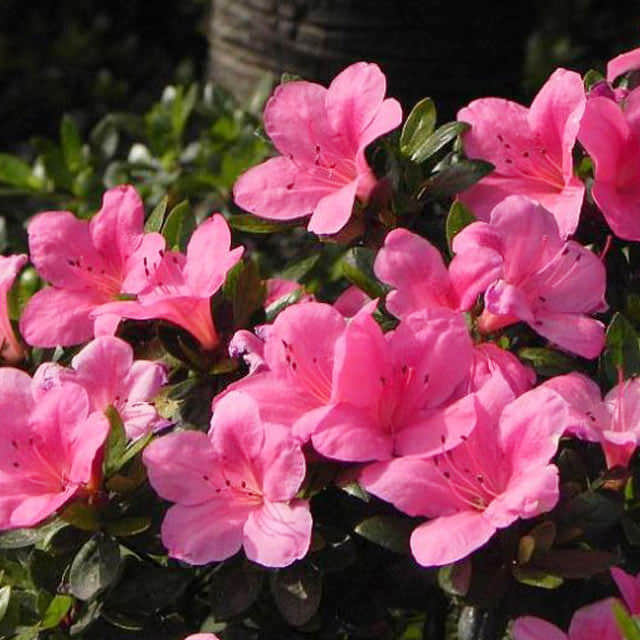
Why does your Rhododendron indicum have drooping leaves? Diagnose the cause and fix it with our step-by-step guide.
Azaleas have shallow, fibrous root systems that are highly sensitive to drying out. When the substrate becomes too dry, the plant loses turgor pressure, causing the characteristic limpness in leaves.
Overwatering or poor drainage in acidic soils leads to fungal pathogens attacking the roots. This prevents the Japanese Azalea from absorbing water, paradoxically causing leaves to droop even when soil is wet.
Rhododendron indicum prefers cooler, temperate environments. Extreme heat or direct midday sun can cause rapid transpiration that exceeds the plant's ability to pull water from the roots.
Azaleas require acidic soil (pH 4.5-6.0) to uptake iron. If the pH is too high, the plant cannot transport nutrients, leading to weakened foliage and drooping.
Your plant might also be experiencing one of these issues:

 English
 Italiano