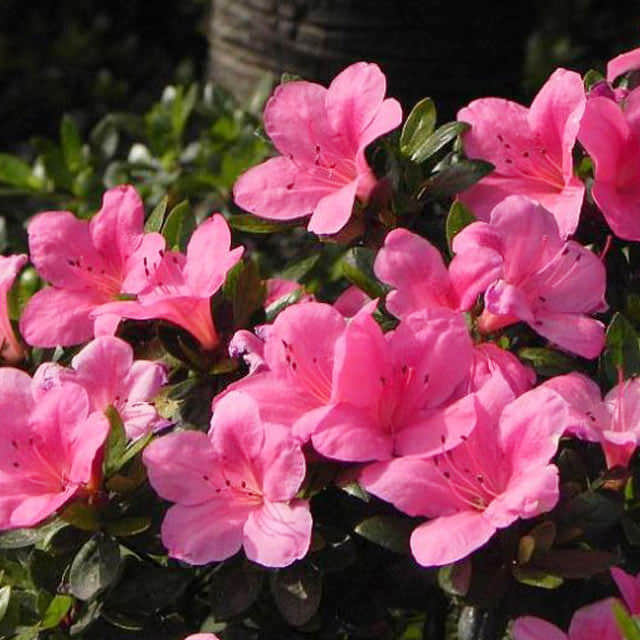
Why does your Rhododendron indicum have fine webbing? Diagnose the cause and fix it with our step-by-step guide.
Spider mites thrive in the hot, dry conditions often experienced by Japanese Azaleas. These tiny arachnids pierce plant cells to feed, leaving behind fine silk webbing as they create colonies on the undersides of leaves.
While not a web itself, extreme fluctuations in soil moisture can cause cells to burst, sometimes resulting in fine, dried fungal growth or silken-looking crusts on leaf margins. This occurs when the Rhododendron's roots take up more water than the leaves can transpire.
In certain climates, young larvae of webworms can begin constructing silk structures around leaf clusters. While more common on deciduous trees, they can occasionally impact tender new growth on Azaleas during seasonal transitions.
Your plant might also be experiencing one of these issues:

 English
 Italiano