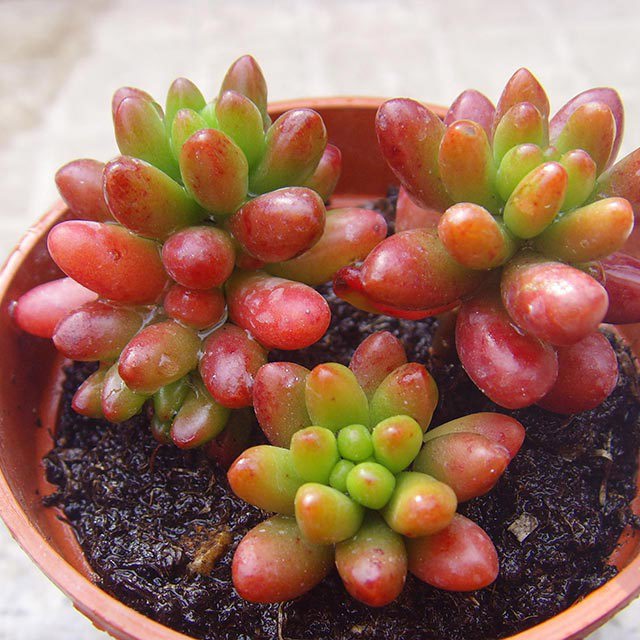
Sedum rubrotinctum White Powder
eco White Powder

Sedum rubrotinctum – White Powder

Why does your Sedum rubrotinctum have white powder? Diagnose the cause and fix it with our step-by-step guide.

pets Pet Friendly

search Possible Causes

error

Powdery Mildew

A fungal pathogen that thrives in high humidity and poor air circulation, creating a distinct white flour-like coating on the fleshy leaves of Sedum rubrotinctum.

Very Common
lightbulb
How to confirm: Inspect if the white patches can be wiped off with your finger or if they appear to be growing within the leaf tissue.
build How to fix it
shopping_cart Recommended Products
1 Apply an organic fungicide to eliminate the fungal spores on the leaf surfaces.
2 Prune and discard any heavily infected leaves to prevent the fungus from spreading to healthy tissue.
3 Improve air circulation around the plant and reduce humidity to create an environment less hospitable to mildew.
error

Mealybugs

Small, soft-bodied insects that secrete a white, cottony, or waxy substance to protect themselves, often clustering in the crevices between the 'jelly bean' leaves.

Very Common
lightbulb
How to confirm: Use a magnifying glass to check for tiny moving insects at the base of the leaves or near the stem nodes.
build How to fix it
shopping_cart Recommended Products
1 Isolate the plant immediately to prevent the mealybugs from spreading to your other houseplants.
2 Use a cotton swab dipped in isopropyl alcohol to manually remove the visible white, cottony clusters from the crevices of the leaves.
3 Apply an organic insecticide spray to the entire plant to eliminate any remaining insects and larvae.
warning

Mineral Deposits (Hard Water)

Calcium and magnesium from tap water can evaporate on the leaf surface, leaving behind a white, crusty residue that looks like powder.

Common
lightbulb
How to confirm: Check if the white spots are only located on the leaf surfaces that have been recently sprayed with water or misted.
build How to fix it
shopping_cart Recommended Products
1 Gently wipe the leaves with a soft, damp cloth or a cotton swab dipped in distilled water to remove the mineral crust without damaging the plant tissue.
2 Switch to using distilled water, rainwater, or filtered water for future watering to prevent new calcium and magnesium deposits from forming on the foliage.
3 Use a soil moisture meter to ensure you are only watering when the substrate is completely dry, as frequent watering can exacerbate mineral buildup in the pot.
warning

Calcium Carbonate/Salt Buildup

Excessive fertilization or salt buildup in the potting medium can migrate to the surface of the succulent leaves during dry periods.

Common
lightbulb
How to confirm: Check if there is a similar white crust forming on the top layer of the soil surface.
build How to fix it
shopping_cart Recommended Products
1 Flush the potting medium thoroughly with distilled or demineralized water to leach out accumulated mineral salts and calcium carbonates.
2 Gently wipe the leaves with a soft, damp cloth to remove the visible white residue from the plant surface.
3 Repot the succulent in fresh, well-draining medium and consider adding perlite to improve aeration and prevent future salt retention.

Other Sedum rubrotinctum problems

Your plant might also be experiencing one of these issues:

local_hospital All symptoms eco All plants with white powder
favorite

