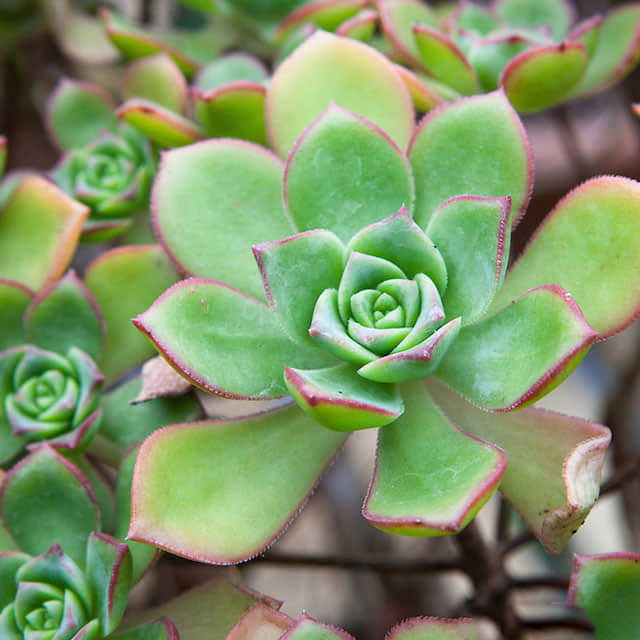
Aeonium haworthii Drooping Leaves
eco Drooping Leaves

Aeonium haworthii – Drooping Leaves

Why does your Aeonium haworthii have drooping leaves? Diagnose the cause and fix it with our step-by-step guide.

search Possible Causes

error

Overwatering and Root Rot

Excessive moisture in the substrate causes oxygen deprivation to the roots, leading to fungal decay. As roots die, they can no longer support the plant's structure, resulting in limp, drooping leaves.

Very Common
lightbulb
How to confirm: Gently lift the plant from its pot to check if the roots are black, slimy, or smell like decomposition.
build How to fix it
shopping_cart Recommended Products
1 Immediately remove the plant from its current container and discard the waterlogged soil to stop the decay process.
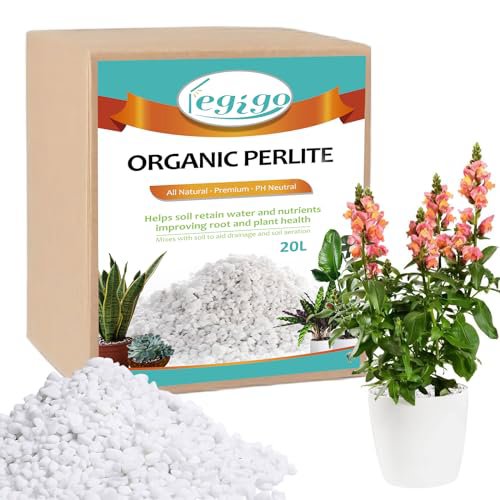
2 Prune away any mushy, black, or foul-smelling roots using sterilized tools and repot the plant in a well-draining, gritty substrate like a mix containing perlite or clay pebbles.
3 Use a moisture meter to monitor the substrate, ensuring you only water when the soil is completely dry to prevent future oxygen deprivation.
error

Dehydration (Underwatering)

Aeoniums store water in their fleshy leaves; when soil remains dry for too long, the plant consumes its internal reserves to survive, causing a loss of turgor pressure.

Very Common
lightbulb
How to confirm: Check if the soil is bone-dry several inches deep and if the leaves feel thin or wrinkled.
build How to fix it
shopping_cart Recommended Products
1 Check the soil moisture level immediately using a moisture meter to confirm the depth of dehydration.
2 Thoroughly soak the soil with water until it drains from the bottom of the pot to replenish the plant's internal water reserves.
3 Ensure the plant is in a pot with excellent drainage, such as a Root & Vessel cylinder pot, to prevent water from pooling and causing rot once rehydrated.
warning

Temperature Stress (Heat Exhaustion)

Extreme high temperatures can cause the plant to enter a temporary state of dormancy or wilt to reduce surface area for transpiration.

Common
lightbulb
How to confirm: Observe if the drooping occurs specifically during the hottest part of the day and recovers at night.
build How to fix it
shopping_cart Recommended Products
1 Move the plant to a cooler, shaded location away from direct afternoon sun to reduce heat absorption.
2 Monitor soil moisture levels to ensure the plant isn't also suffering from dehydration during this heat spell.
3 Apply a light mulch or top dressing to help regulate soil temperature and retain moisture.
warning

Nutrient Deficiency (Nitrogen)

A lack of essential macronutrients prevents the plant from maintaining cell wall strength and chlorophyll production, leading to overall structural weakness.

Common
lightbulb
How to confirm: Look for signs of yellowing (chlorosis) on older leaves in addition to the drooping symptom.
build How to fix it
shopping_cart Recommended Products
1 Apply a nitrogen-rich organic fertilizer to boost chlorophyll production and restore leaf strength.
2 Check the soil moisture levels with a meter to ensure the drooping isn't actually caused by underwatering or root rot.
3 Ensure the plant is receiving adequate light, as insufficient energy can mimic nutrient deficiency symptoms.

Other Aeonium haworthii problems

Your plant might also be experiencing one of these issues:

local_hospital All symptoms eco All plants with drooping leaves
favorite