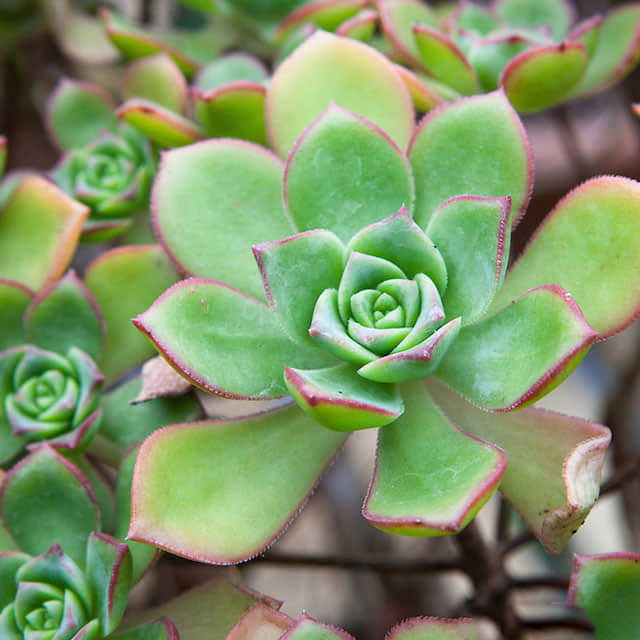
Why does your Aeonium haworthii have yellow leaves? Diagnose the cause and fix it with our step-by-step guide.
Aeoniums are succulents that store water in their leaves; excessive moisture causes the roots to suffocate and decay, leading to systemic yellowing. This is the most common cause of chlorosis in Aeonium haworthii when soil drainage is insufficient.
A lack of available nitrogen prevents the production of chlorophyll, causing older leaves to turn yellow before moving up the rosette. This often occurs if the plant has been in the same potting medium for several years without fertilization.
While Aeoniums are resilient, sudden exposure to frost or temperatures near freezing can damage cell walls, causing leaves to lose pigment and turn yellow or translucent. This is common for 'Greenovia' types during winter transitions.
Moving an Aeonium haworthii too quickly from shade to intense, direct midday sun can cause photo-oxidation, manifesting as yellowing or bleaching. Conversely, insufficient light can lead to etiolation and pale, yellowish leaves.
Your plant might also be experiencing one of these issues:

 English
 Italiano