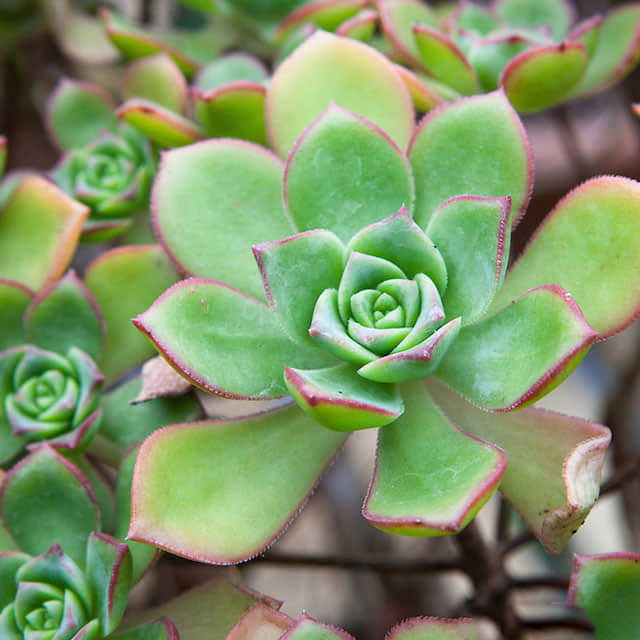
Aeonium haworthii Fine Webbing
eco Fine Webbing

Aeonium haworthii – Fine Webbing

Why does your Aeonium haworthii have fine webbing? Diagnose the cause and fix it with our step-by-step guide.

search Possible Causes

error

Two-Spotted Spider Mite Infestation

The fine webbing is a hallmark sign of spider mites, which thrive in the warm, dry conditions preferred by Aeonium haworthii. These pests pierce cell walls of the succulent leaves to suck out nutrients, causing stippling and eventual leaf drop.

Very Common
lightbulb
How to confirm: Hold a white piece of paper under a leaf and tap the plant to see if tiny specks fall onto the paper.
build How to fix it
shopping_cart Recommended Products
1 Immediately spray the plant with an organic miticide to kill existing spider mites and their eggs.
2 Increase humidity and reduce dry heat by misting the leaves regularly, as spider mites thrive in arid environments.
3 Carefully wipe the leaves with a damp cloth to physically remove webbing and any remaining pests from the plant surface.
warning

Broad Mites

While broad mites are too small to be seen individually, they can cause structural changes and fine silken textures in some succulent species. They primarily target the growing points (meristems) of Aeonium, causing distorted or stunted new growth.

Common
lightbulb
How to confirm: Inspect the very center of the rosette for any signs of deformation or curling of new leaves.
build How to fix it
shopping_cart Recommended Products
1 Inspect the growing tips of the Aeonium for distorted or stunted leaves and apply an organic miticide to eliminate the mites and their eggs.
2 Prune away any severely distorted or heavily infested growth tips using sterilized shears to prevent the mites from spreading to healthy parts of the plant.
3 Improve airflow around the plant and avoid overcrowding to make the environment less hospitable for mite populations.
info

High Humidity and Mold/Fungal Growth

In rare cases, extremely high humidity combined with poor airflow can cause fine fungal hyphae to appear as a web-like structure on the leaf surface. This is less common for Aeoniums but can occur if the plant is kept in an enclosed terrarium without ventilation.

Rare
lightbulb
How to confirm: Check if the 'webbing' is actually fuzzy or appears more like a thin layer of mold rather than structured silk.
build How to fix it
shopping_cart Recommended Products
1 Improve airflow around the plant by removing it from enclosed terrariums and ensuring it is in a well-ventilated area to prevent fungal growth.
2 Apply an organic fungicide to treat the fungal hyphae and protect the plant from further spread.
3 Monitor the soil moisture levels to ensure the substrate is not staying too wet, which can contribute to high humidity levels.

Other Aeonium haworthii problems

Your plant might also be experiencing one of these issues:

local_hospital All symptoms eco All plants with fine webbing
favorite