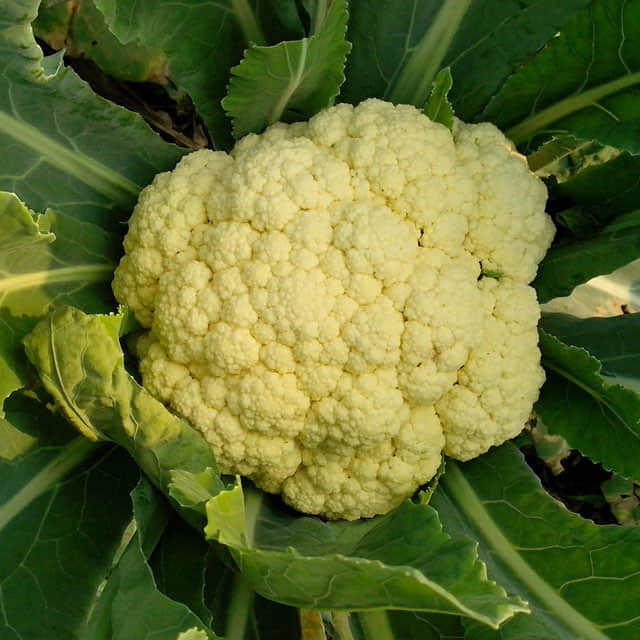
Why does your Brassica oleracea botrytis have sticky leaves? Diagnose the cause and fix it with our step-by-step guide.
Pet FriendlyAphids feed on the phloem of cauliflower leaves, excreting a sugary substance known as honeydew which creates a sticky residue. This often leads to secondary issues like sooty mold growth on the leaf surface.
Whiteflies suck sap from the cauliflower foliage, leaving behind sticky honeydew that can coat the entire plant. Large numbers of these pests often result in visible white fluttering insects when the plant is disturbed.
Scale insects attach themselves to the stems and leaves of Brassica species, piercing the plant tissue to extract nutrients. Their metabolic byproducts are excreted as a sticky film on the leaf surfaces.
Leafhoppers pierce the cells of cauliflower leaves to feed, which can cause both sticky exudates and characteristic stippling or yellowing patterns. The feeding process disrupts the plant's ability to regulate moisture.
Your plant might also be experiencing one of these issues:

 English
 Italiano

