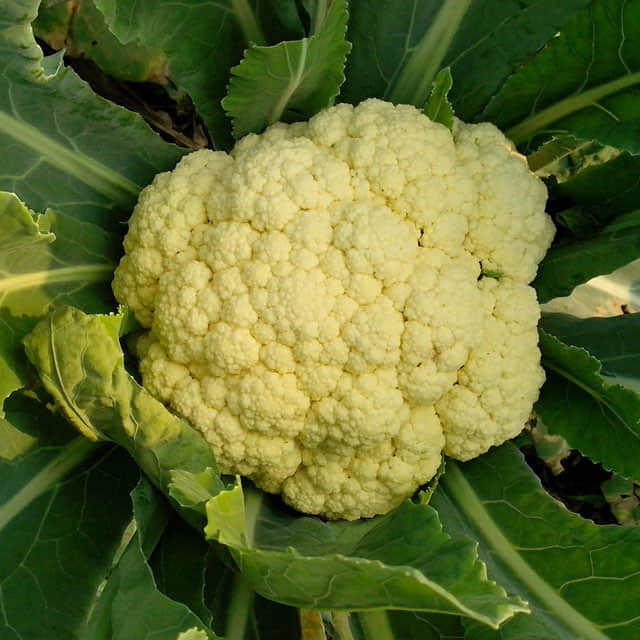
Brassica oleracea botrytis White Powder
eco White Powder

Brassica oleracea botrytis – White Powder

Why does your Brassica oleracea botrytis have white powder? Diagnose the cause and fix it with our step-by-step guide.

pets Pet Friendly

search Possible Causes

error

Powdery Mildew

A fungal disease caused by Oomycetes that manifests as white, talcum-like patches on leaves and can eventually affect the developing curd. It thrives in high humidity with moderate temperatures and can weaken the plant's photosynthetic capacity.

Very Common
lightbulb
How to confirm: Inspect the undersides of the leaves for fuzzy white growth that appears to be sitting on the surface rather than being part of the leaf tissue.
build How to fix it
shopping_cart Recommended Products
1 Apply an organic fungicide to the affected leaves to eliminate the fungal spores and prevent further spread.
2 Prune and remove any heavily infected leaves to reduce the fungal load and improve airflow around the plant.
3 Increase air circulation and avoid overhead watering to ensure leaves stay dry, as high humidity promotes mildew growth.
warning

Sclerotinia Sclerotiorum (White Mold)

This soil-borne fungus produces a dense, white, cottony mycelium that can envelop the cauliflower head and stem. It often leads to rapid tissue decay and the formation of hard, black survival structures called sclerotia.

Common
lightbulb
How to confirm: Check if the white mass is accompanied by soft, water-soaked tissue or browning of the stem base.
build How to fix it
shopping_cart Recommended Products
1 Immediately remove and destroy all infected plant material and cauliflower heads to prevent the spread of fungal spores and sclerotia to healthy plants.
2 Apply an organic fungicide to the remaining healthy plants to control the spread of the white mold.
3 Improve soil drainage and air circulation around the base of the plants to create an environment less hospitable to fungal growth.
warning

Mealybug Infestation

Small, soft-bodied insects covered in a white, waxy secretion that can resemble powder on the leaves and curd. Their feeding causes chlorosis and may lead to sooty mold growth due to honeydew excretion.

Common
lightbulb
How to confirm: Use a magnifying glass to look for tiny, slow-moving insects embedded within the white waxy patches.
build How to fix it
shopping_cart Recommended Products
1 Apply an organic insecticide to eliminate the mealybug population and remove the white waxy coating.
2 Inspect the undersides of leaves and crevices for any remaining insects and wipe them away with a damp cloth.
3 Monitor the plant closely for any new infestations and ensure the plant is not in a high-humidity area that favors pest survival.
warning

Salt Accumulation (Salinity)

Excessive fertilizer or irrigation water minerals can crystallize on the leaf surface, appearing as a fine white crust. This is particularly common in Brassica species grown in poorly drained soils with high evaporation rates.

Common
lightbulb
How to confirm: Check if the white substance dissolves easily when touched with a damp cloth and if there are signs of leaf edge burn.
build How to fix it
shopping_cart Recommended Products
1 Flush the soil thoroughly with large amounts of fresh, low-mineral water to leach out accumulated salts from the root zone.
2 Gently wipe the leaves with a damp cloth to remove the visible white crust and prevent further leaf damage.
3 Monitor soil moisture levels closely to ensure you are not over-irrigating, which can exacerbate mineral buildup in poorly drained areas.

Other Brassica oleracea botrytis problems

Your plant might also be experiencing one of these issues:

local_hospital All symptoms eco All plants with white powder
favorite