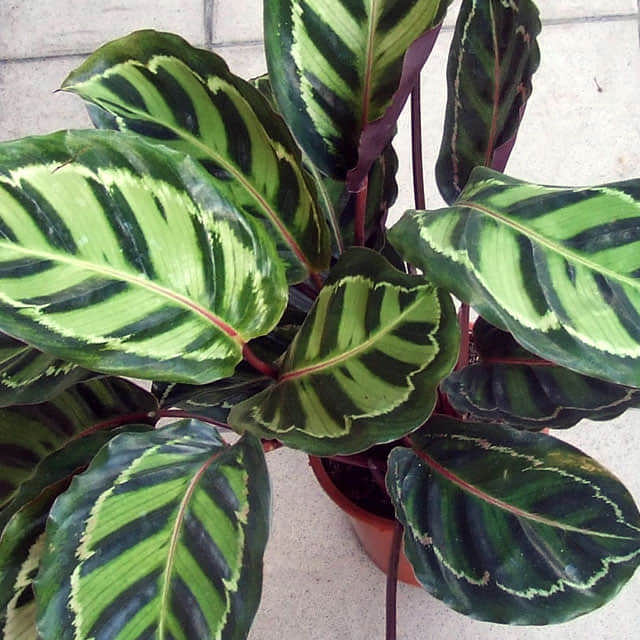
Why does your Calathea roseopicta have tiny black flies? Diagnose the cause and fix it with our step-by-step guide.
Pet FriendlyThe tiny black flies are likely the adult stage of fungus gnats, which breed in the moist organic matter of Calathea soil. Their larvae feed on decaying plant material and can damage the delicate root system of your Rose-painted Calathea by consuming fine root hairs.
Calatheas require consistent moisture but are highly susceptible to root rot if the substrate stays saturated. Excessive moisture creates the perfect anaerobic environment for fungus gnat larvae to thrive and can cause the plant's rhizomes to decay.
If old Calathea leaves are left to rot on top of the soil, they provide an ideal breeding ground and food source for flies. The decomposition process attracts various dipteran species to the pot.
Your plant might also be experiencing one of these issues:

 English
 Italiano


