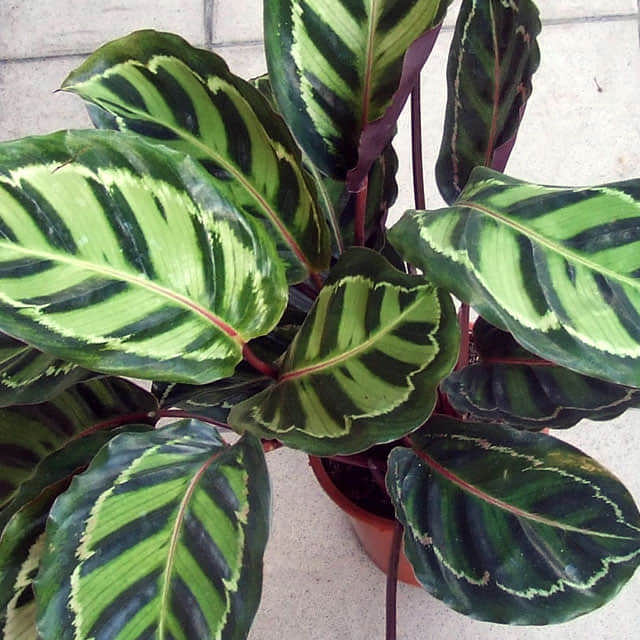
Why does your Calathea roseopicta have white cottony spots? Diagnose the cause and fix it with our step-by-step guide.
Pet FriendlyThese sap-sucking insects produce a white, waxy, cotton-like secretion to protect themselves. They cluster in the crevices of Calathea leaves and near the stems, draining the plant's nutrients and causing leaf yellowing.
Scale insects can produce white, fuzzy coverings that mimic cotton. In Calathea, these pests settle on the underside of leaves and stems, causing stunted growth and sticky honeydew residue.
While typically gray, early stages of fungal decay in high-humidity environments can appear as fuzzy, light-colored patches. Calatheas are sensitive to stagnant air, which promotes this fungal growth.
Your plant might also be experiencing one of these issues:

 English
 Italiano
