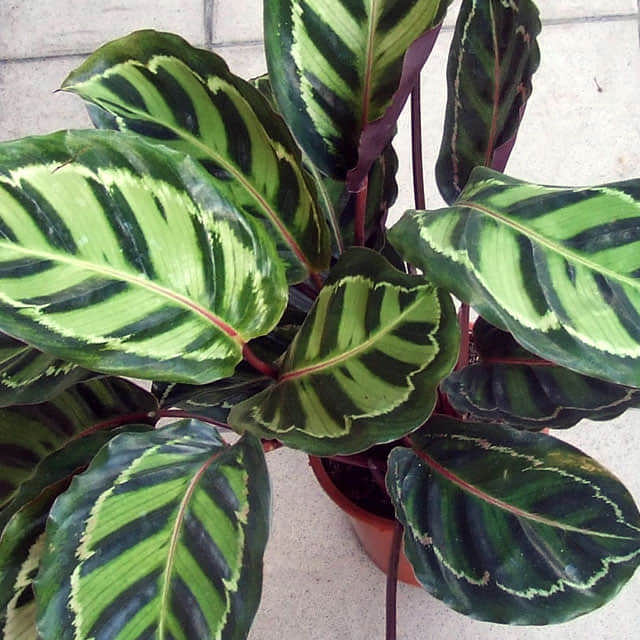
Calathea roseopicta White Powder
eco White Powder

Calathea roseopicta – White Powder

Why does your Calathea roseopicta have white powder? Diagnose the cause and fix it with our step-by-step guide.

pets Pet Friendly

search Possible Causes

error

Powdery Mildew

A fungal disease caused by poorly ventilated environments and high humidity on leaf surfaces, manifesting as white, flour-like patches. In Calatheas, this can eventually lead to leaf spotting and necrosis.

Very Common
lightbulb
How to confirm: Check if the white spots can be wiped off with a damp cloth or if they appear to be growing 'into' the leaf tissue.
build How to fix it
shopping_cart Recommended Products
1 Treat the affected leaves immediately with an organic fungicide to stop the fungal spread.
2 Improve air circulation around the plant by using a small fan and ensure the plant is not in a stagnant, overly humid corner.
3 Prune and discard any heavily infected leaves to prevent the spores from contaminating healthy foliage.
error

Mealybug Infestation

Small, white, cottony insects that congregate in the crevices of Calathea leaves and stems. They suck sap from the plant, often leaving behind a sticky residue called honeydew.

Very Common
lightbulb
How to confirm: Inspect the undersides of leaves and the leaf axils for tiny, moving white clusters that look like bits of cotton.
build How to fix it
shopping_cart Recommended Products
1 Isolate the plant immediately to prevent the mealybugs from spreading to other houseplants.
2 Treat the infestation by spraying the plant with an organic insecticide to kill adult insects and larvae.
3 Gently wipe away visible white cottony clusters from leaf crevices and stems using a cotton swab dipped in isopropyl alcohol.
warning

Mineral/Hard Water Deposits

Accumulation of calcium, magnesium, or fluoride from tap water drying on the foliage. This is common in Calatheas because they are sensitive to chemicals in irrigation water.

Common
lightbulb
How to confirm: Observe if the white residue is concentrated around the edges of the leaves and feels crusty rather than fuzzy.
build How to fix it
shopping_cart Recommended Products
1 Gently wipe the leaves with a soft, damp cloth using distilled or filtered water to remove the mineral buildup and prevent leaf burn.
2 Switch to using distilled, rainwater, or thoroughly dechlorinated water for all future irrigation to avoid further chemical accumulation.
3 Monitor soil moisture levels closely to ensure you are not overwatering, which can exacerbate mineral leaching from the substrate.
warning

Spider Mites

Tiny arachnids that thrive in low humidity, often leaving fine, silken webbing that can look like white dust. This is frequently accompanied by yellow stippling on the leaf surface.

Common
lightbulb
How to confirm: Look for extremely fine webbing between the leaves and hold a white piece of paper underneath a leaf to see if tiny specks fall off when tapped.
build How to fix it
shopping_cart Recommended Products
1 Treat the plant with an organic insecticide/miticide spray to eliminate the spider mite population and remove any visible webbing.
2 Increase local humidity around the Calathea by using a pebble tray or a fine misting bottle to create an environment less favorable to mites.
3 Wipe the leaves with a damp cloth to physically remove dust and any remaining mite eggs or webbing.

Other Calathea roseopicta problems

Your plant might also be experiencing one of these issues:

local_hospital All symptoms eco All plants with white powder
favorite