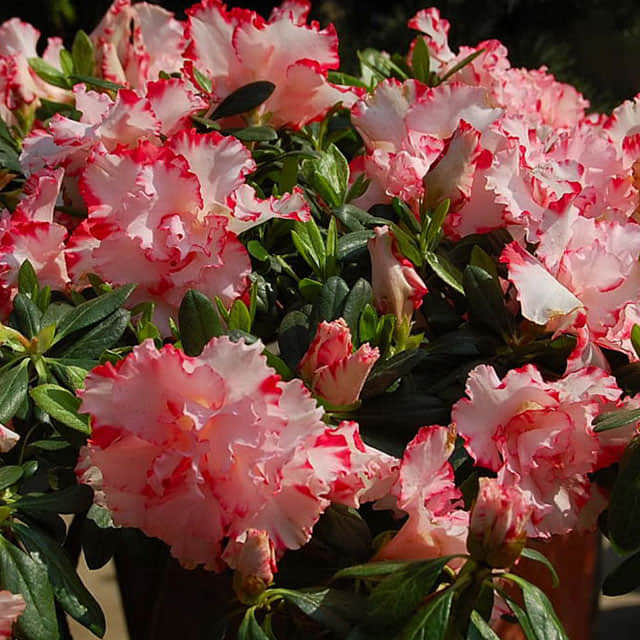
Why does your Rhododendron atlanticum have drooping leaves? Diagnose the cause and fix it with our step-by-step guide.
Azaleas have shallow root systems that are highly sensitive to moisture fluctuations. Drought causes leaves to wilt to conserve water, while overwatering leads to root hypoxia and subsequent drooping due to inability to uptake water.
This soil-borne pathogen thrives in poorly drained acidic soils common to Rhododendron species. It destroys the fine feeder roots, making it impossible for the plant to support its foliage weight.
Atlantic Azaleas prefer cool, temperate conditions. Sudden spikes in temperature or intense afternoon sun can cause rapid transpiration that exceeds the plant's root capacity, leading to temporary wilting.
Rhododendrons are acid-loving plants; if the soil pH rises too high, iron becomes unavailable. While primary symptoms are yellowing leaves, severe deficiency can lead to loss of turgor pressure and drooping.
Your plant might also be experiencing one of these issues:

 English
 Italiano