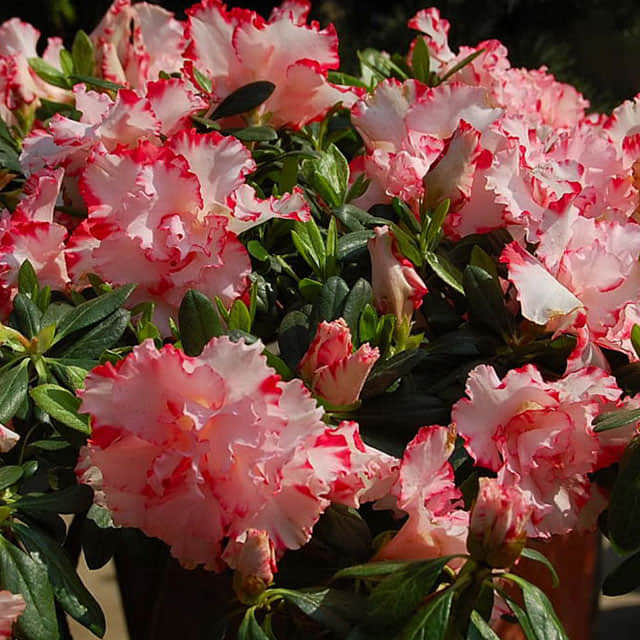
Rhododendron atlanticum Yellow Leaves
eco Yellow Leaves

Rhododendron atlanticum – Yellow Leaves

Why does your Rhododendron atlanticum have yellow leaves? Diagnose the cause and fix it with our step-by-step guide.

search Possible Causes

error

Iron Chlorosis (Nutrient Deficiency)

Atlantic Azaleas require acidic soil (pH 4.5-5.5) to uptake iron; if the pH is too high, iron becomes chemically unavailable, causing interveinal yellowing.

Very Common
lightbulb
How to confirm: Inspect if the leaf veins remain dark green while the rest of the leaf tissue turns pale yellow.
build How to fix it
shopping_cart Recommended Products
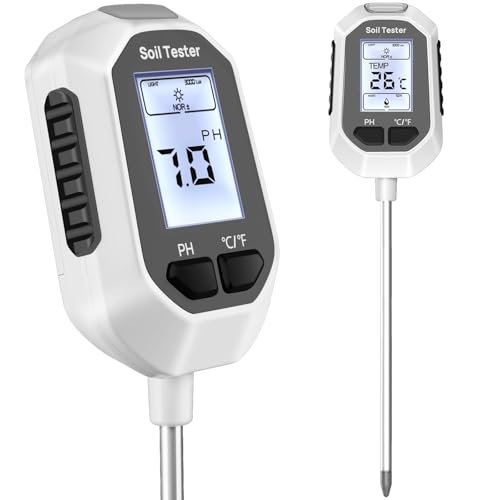
1 Test your soil pH immediately to ensure it is within the acidic range of 4.5 to 5.5, as high pH prevents iron uptake.
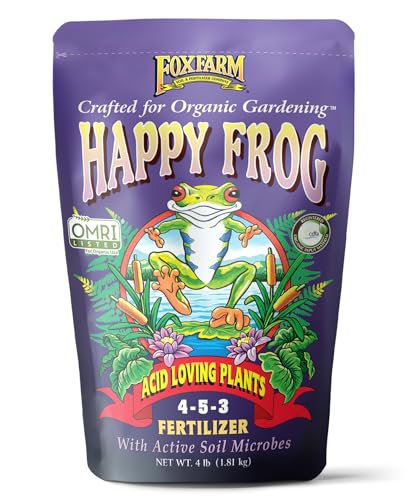
2 Apply an acid-loving plant fertilizer to lower soil pH and provide necessary nutrients for Rhododendrons.
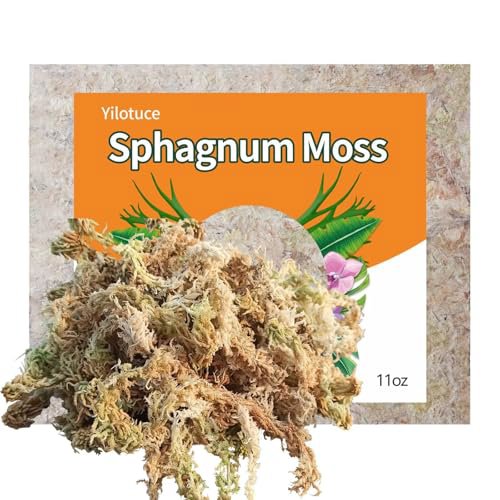
3 Amend the soil with organic matter or acidifying substrates like sphagnum moss to help maintain a low pH environment.
error

Root Rot (Phytophthora)

Excessive moisture or poor drainage in heavy soils leads to fungal pathogens attacking the roots, preventing water and nutrient transport to the foliage.

Very Common
lightbulb
How to confirm: Gently lift the edge of the soil to check if the roots are dark, slimy, or emitting an unpleasant odor.
build How to fix it
shopping_cart Recommended Products
1 Immediately inspect the roots for mushy, dark brown decay and prune away any dead or rotting sections using sterilized tools.
2 Repot the plant into a well-draining medium specifically formulated for acid-loving plants to ensure proper aeration and moisture control.
3 Switch to a container with superior drainage and use a moisture meter to prevent the soil from remaining waterlogged.
warning

Nitrogen Deficiency

A lack of nitrogen in the soil causes older leaves to turn uniformly yellow as the plant mobilizes nutrients to newer growth.

Common
lightbulb
How to confirm: Check if the yellowing is starting on the oldest, bottom-most leaves first.
build How to fix it
shopping_cart Recommended Products
1 Apply a nitrogen-rich organic fertilizer to the soil to replenish essential nutrients.
2 Supplement with a specialized acid-loving fertilizer to ensure the plant can properly absorb nutrients in low pH soil.
3 Monitor soil moisture levels using a moisture meter to ensure nitrogen is not being leached away by overwatering.
warning

Water Stress (Drought)

Azaleas have shallow root systems that are highly susceptible to drying out, which can lead to leaf yellowing and eventual desiccation.

Common
lightbulb
How to confirm: Check the soil moisture 2 inches below the surface; if it is bone dry, the plant likely needs more consistent irrigation.
build How to fix it
shopping_cart Recommended Products
1 Check the soil moisture level immediately using a moisture meter to confirm if the root zone has reached a critical dry point.
2 Apply a deep, slow watering to the base of the plant to ensure moisture reaches the shallow root system, and consider using a mulch layer to retain hydration.
3 If the plant is in a container, ensure it is in a well-draining pot and consider adding organic matter like sphagnum moss to help the soil retain moisture.

Other Rhododendron atlanticum problems

Your plant might also be experiencing one of these issues:

local_hospital All symptoms eco All plants with yellow leaves
favorite