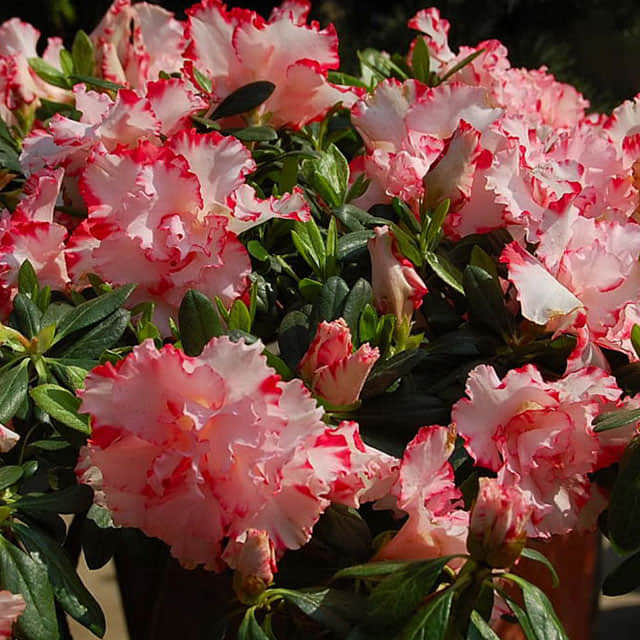
Rhododendron atlanticum Tiny Black Flies
eco Tiny Black Flies

Rhododendron atlanticum – Tiny Black Flies

Why does your Rhododendron atlanticum have tiny black flies? Diagnose the cause and fix it with our step-by-step guide.

search Possible Causes

error

Fungus Gnats

These tiny black flies are the larvae of fungus gnats, which thrive in the moist, organic-rich soil preferred by Atlantic Azaleas. The adults emerge to lay eggs in the top layer of soil, while the larvae feed on organic matter and can occasionally damage delicate feeder roots.

Very Common
lightbulb
How to confirm: Place a yellow sticky trap near the base of the plant to confirm presence.
build How to fix it
shopping_cart Recommended Products
1 Deploy yellow sticky traps to capture the adult flying gnats and break the reproductive cycle.
2 Allow the top inch of soil to dry out completely between waterings to make the environment less hospitable for larvae.
3 Apply a moisture-regulating top dressing like perlite or sand to create a dry barrier that prevents adults from reaching the soil to lay eggs.
error

Overwatering / Soil Compaction

Frequent watering or poorly draining soil creates a perpetual damp environment that attracts fungus gnats and encourages fungal growth. For Atlantic Azaleas, which require well-draining acidic soil, excess moisture is the primary driver of pest outbreaks.

Very Common
lightbulb
How to confirm: Insert your finger two inches into the soil to check if it remains saturated for extended periods.
build How to fix it
shopping_cart Recommended Products
1 Reduce watering frequency and allow the top inch of soil to dry out completely before watering again to eliminate the damp environment attracting gnats.
2 Apply yellow sticky traps near the soil surface to capture and remove the adult fungus gnats from your plant.
3 Repot the plant in a well-draining, acidic medium enriched with perlite to improve aeration and prevent future soil compaction.
warning

Black Vine Weevil (Adults)

While usually larger, some species of vine weevils can be mistaken for small dark flies when active at night. The larvae are particularly destructive to Azaleas as they feed directly on the root system, causing wilting.

Common
lightbulb
How to confirm: Check the undersides of leaves for small, notched feeding marks or look for larvae in the soil during repotting.
build How to fix it
shopping_cart Recommended Products
1 Inspect the soil surface and base of the plant for small, dark insects and check for any signs of wilting or soft stems.
2 Apply an organic insecticide spray to the soil and plant foliage to target adult weevils and prevent further egg laying.
3 Since larvae feed on roots, consider repotting the plant in fresh, well-draining soil to remove any existing larvae and improve root health.

Other Rhododendron atlanticum problems

Your plant might also be experiencing one of these issues:

local_hospital All symptoms eco All plants with tiny black flies
favorite