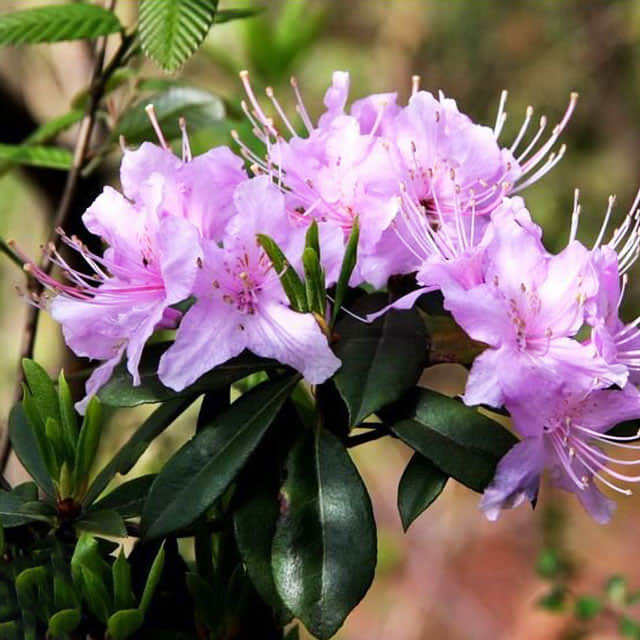
Rhododendron concinnum Fine Webbing
eco Fine Webbing

Rhododendron concinnum – Fine Webbing

Why does your Rhododendron concinnum have fine webbing? Diagnose the cause and fix it with our step-by-step guide.

search Possible Causes

error

Two-Spotted Spider Mite Infestation

These microscopic arachnids thrive in the warm, dry conditions that many Rhododendron species dislike. They pierce the leaf cells to suck out nutrients, leaving behind fine silken webs and characteristic stippling (tiny white dots) on the foliage.

Very Common
lightbulb
How to confirm: Hold a white piece of paper under a leaf and tap it sharply to see if tiny crawling specks fall onto the paper.
build How to fix it
shopping_cart Recommended Products
1 Apply an organic insecticide/miticide spray to the plant to eliminate the spider mite population and destroy eggs.
2 Increase humidity around the plant and ensure the soil remains consistently moist, as spider mites thrive in dry environments.
3 Gently wipe the leaves with a damp cloth to physically remove webbing and any remaining mites from the foliage.
warning

Edema (Physiological Disorder)

While not a web itself, rapid cell expansion caused by irregular watering can cause leaves to burst, creating a crusty texture that may trap dust or debris, appearing superficially like fine webbing. This is common in compact Rhododendrons when soil moisture fluctuates wildly.

Common
lightbulb
How to confirm: Inspect the undersides of older leaves for small, dark, raised bumps or corky lesions.
build How to fix it
shopping_cart Recommended Products
1 Stabilize the watering schedule to prevent rapid cell expansion and moisture fluctuations. Use a moisture meter to ensure the soil remains consistently damp but not waterlogged.
2 Ensure the plant is in a well-draining medium to prevent the root zone from becoming anaerobic, which exacerbates edema.
3 If the 'webbing' is actually dust or debris trapped in leaf lesions, gently wipe the leaves with a damp cloth to clean the foliage.
warning

Fall Webworm (Early Stage)

In certain climates, young larvae of webworms create silk structures to protect themselves while feeding on deciduous and some evergreen shrubs. If the webbing is localized to specific leaf clusters rather than a fine mist over the whole plant, this is likely.

Common
lightbulb
How to confirm: Gently pull at the webbing to see if there are visible green caterpillars inside the silk structure.
build How to fix it
shopping_cart Recommended Products
1 Manually remove the affected leaf clusters and any visible silk webbing from the plant to prevent the larvae from spreading to other parts of the shrub.
2 Apply an organic insecticide spray to the plant to target any remaining larvae and protect against further infestation.
3 Monitor the plant closely for new silk structures and continue treating with a biological control if webbing reappears.

Other Rhododendron concinnum problems

Your plant might also be experiencing one of these issues:

local_hospital All symptoms eco All plants with fine webbing
favorite