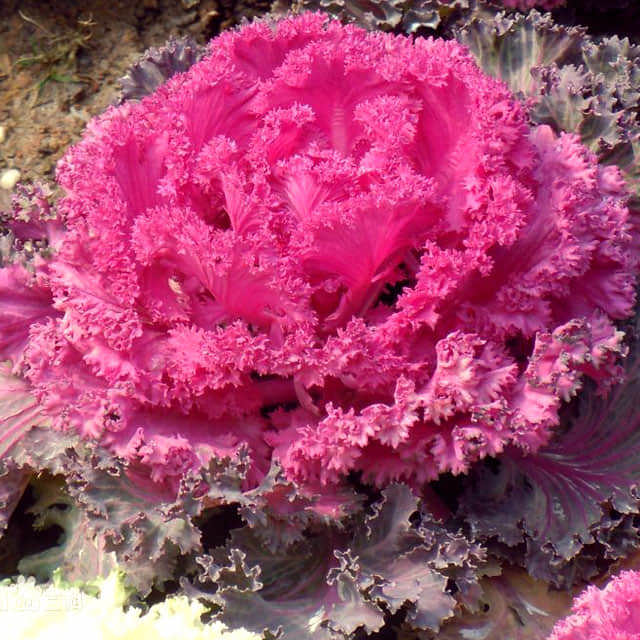
Brassica oleracea acephala f.tricolor Brown Leaf Tips
eco Brown Leaf Tips

Brassica oleracea acephala f.tricolor – Brown Leaf Tips

Why does your Brassica oleracea acephala f.tricolor have brown leaf tips? Diagnose the cause and fix it with our step-by-step guide.

pets Pet Friendly

search Possible Causes

error

Salt Accumulation (Fertilizer Burn)

Ornamental kale is sensitive to high concentrations of soluble salts in the soil. Excessive nitrogen or mineral buildup from frequent fertilization causes osmotic stress, drawing moisture out of the leaf margins and turning tips brown.

Very Common
lightbulb
How to confirm: Check if the browning occurred shortly after a recent fertilization period.
build How to fix it
shopping_cart Recommended Products
1 Flush the soil thoroughly with large amounts of fresh, distilled, or rainwater to leach out excess mineral salts from the root zone.
2 Prune away the most severely burnt leaves to prevent further aesthetic decline and reduce the plant's metabolic load.
3 Repot the plant into fresh, high-quality potting soil and avoid using high-nitrogen fertilizers until new growth appears healthy.
error

Drought Stress / Low Humidity

Brassica oleracea requires consistent moisture to maintain turgor pressure. When soil dries out completely, the plant cannot transport water to the furthest extremities of the leaves, leading to necrotic leaf tips.

Very Common
lightbulb
How to confirm: Stick your finger two inches into the soil to see if it feels bone-dry.
build How to fix it
shopping_cart Recommended Products
1 Check the soil moisture level immediately using a moisture meter to determine if the root zone has reached a critical dry point.
2 Increase local humidity around the plant and ensure the soil remains consistently moist but not waterlogged to restore leaf turgor.
3 Apply a consistent watering schedule and consider using a pebble tray or humidifier to prevent the air from drying out the leaf edges.
warning

Temperature Fluctuations (Heat Stress)

While ornamental kale thrives in cool weather, sudden spikes in temperature can cause transpiration rates to exceed water uptake. This rapid moisture loss often manifests as scorched or brown leaf edges.

Common
lightbulb
How to confirm: Observe if the browning coincided with a period of unseasonably high daytime temperatures.
build How to fix it
shopping_cart Recommended Products
1 Move the plant to a cooler, shaded location to protect it from direct heat and stabilize transpiration rates.
2 Monitor soil moisture levels closely to ensure the plant remains hydrated during heat spikes; use a moisture meter to prevent dehydration.
3 Apply a liquid seaweed fertilizer to help the plant recover from environmental stress and boost nutrient uptake.
warning

Potassium Deficiency

A lack of available potassium interferes with the plant's ability to regulate stomatal conductance and water use. This deficiency typically presents as chlorosis followed by necrosis specifically at the leaf margins and tips.

Common
lightbulb
How to confirm: Examine if the browning is accompanied by yellowing (chlorosis) moving inward from the edges.
build How to fix it
shopping_cart Recommended Products
1 Apply a potassium-rich organic fertilizer to the soil to restore nutrient availability and support water regulation.
2 Monitor soil moisture levels closely using a moisture meter to ensure the plant is not experiencing secondary stress from dehydration.
3 Ensure the plant is in a well-draining container to prevent nutrient leaching and root rot.

Other Brassica oleracea acephala f.tricolor problems

Your plant might also be experiencing one of these issues:

local_hospital All symptoms eco All plants with brown leaf tips
favorite