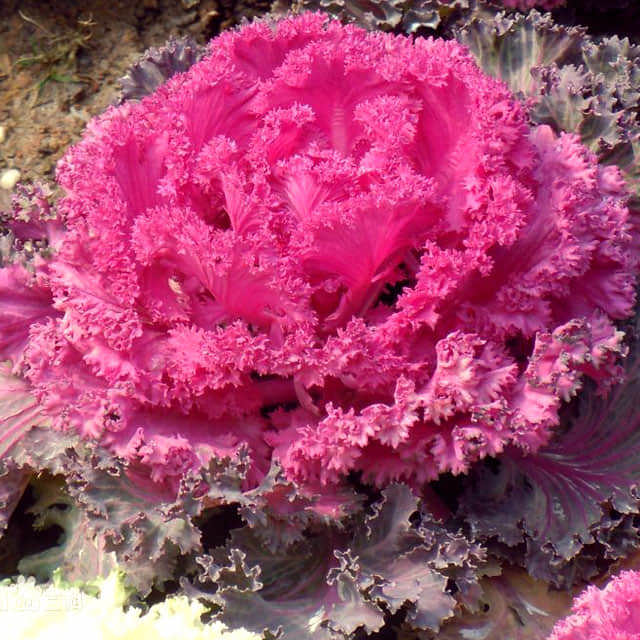
Brassica oleracea acephala f.tricolor Fine Webbing
eco Fine Webbing

Brassica oleracea acephala f.tricolor – Fine Webbing

Why does your Brassica oleracea acephala f.tricolor have fine webbing? Diagnose the cause and fix it with our step-by-step guide.

pets Pet Friendly

search Possible Causes

error

Two-Spotted Spider Mite (Tetranychus urticae)

These tiny arachnids thrive in warm, dry conditions and feed on the underside of ornamental kale leaves, injecting saliva that destroys plant cells. The fine webbing is a defensive silk structure created by the mite colony to protect themselves and their eggs.

Very Common
lightbulb
How to confirm: Hold a white piece of paper underneath a leaf and tap the leaf sharply to see if tiny crawling dots fall onto the paper.
build How to fix it
shopping_cart Recommended Products
1 Immediately spray the plant with an organic miticide or insecticide to kill the spider mite population and destroy their protective webbing.
2 Increase humidity around the plant and ensure the soil remains moist, as spider mites thrive in hot, dry environments.
3 Prune and dispose of heavily infested or dead leaves to prevent the mite colony from spreading to healthy parts of the kale.
warning

Edmidge/Leaf Miner Mites

Certain microscopic mite species can create silk-like textures or fine webs while tunneling through the mesophyll of the Brassica leaves. This disrupts the leaf's ability to photosynthesize and often appears alongside silvered patches.

Common
lightbulb
How to confirm: Inspect the leaves for serpentine, winding tunnels or blotches beneath the leaf surface.
build How to fix it
shopping_cart Recommended Products
1 Apply an organic insecticide spray to eliminate mites and their larvae on the leaf surfaces.
2 Inspect the undersides of leaves for more webbing and remove any heavily infested or dead foliage to prevent further spread.
3 Monitor soil moisture levels to ensure the plant is not under drought stress, which can make it more susceptible to mite infestations.
warning

High Humidity with Secondary Fungal Growth

While not true 'webs,' certain fungal hyphae can appear as a fine, fuzzy web-like coating on the edges of kale leaves during periods of stagnant, humid air. This often precedes visible mold or rot in the tightly packed leaf rosettes.

Common
lightbulb
How to confirm: Check if the 'webbing' disappears when touched or if it is actually a fuzzy growth rooted in the leaf tissue.
build How to fix it
shopping_cart Recommended Products
1 Improve air circulation around the kale rosettes to reduce stagnant humidity and prevent fungal spread.
2 Apply an organic fungicide to treat the fungal hyphae and protect healthy leaf tissue.
3 Monitor soil moisture levels closely to ensure the plant is not being overwatered in the humid environment.

Other Brassica oleracea acephala f.tricolor problems

Your plant might also be experiencing one of these issues:

local_hospital All symptoms eco All plants with fine webbing
favorite