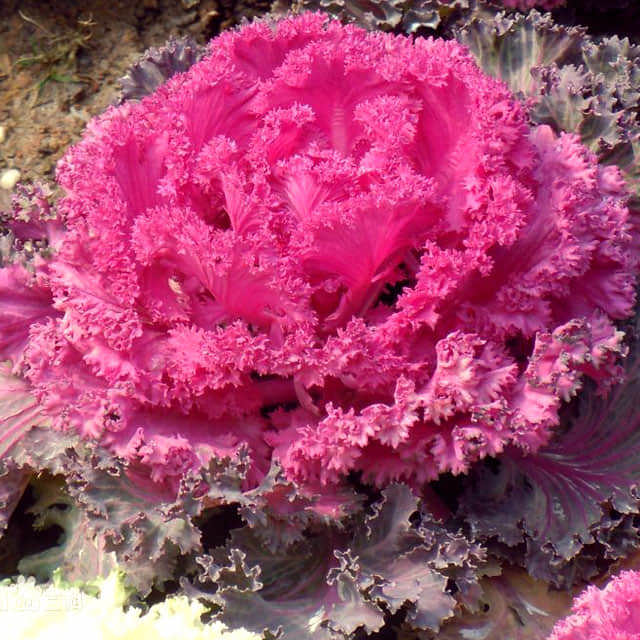
Brassica oleracea acephala f.tricolor Yellow Leaves
eco Yellow Leaves

Brassica oleracea acephala f.tricolor – Yellow Leaves

Why does your Brassica oleracea acephala f.tricolor have yellow leaves? Diagnose the cause and fix it with our step-by-step guide.

pets Pet Friendly

search Possible Causes

error

Nitrogen Deficiency

Nitrogen is a mobile nutrient; when lacking, the plant pulls nitrogen from older leaves to support new growth, causing uniform yellowing of lower foliage. In ornamental kale, this prevents the development of the vibrant purple and white pigments characteristic of the species.

Very Common
lightbulb
How to confirm: Observe if the yellowing starts strictly on the oldest, bottom leaves while the center remains green.
build How to fix it
shopping_cart Recommended Products
1 Apply a nitrogen-rich liquid fertilizer to provide immediate nutrient uptake and restore vibrant pigmentation to the foliage.
2 Supplement the soil with an organic nitrogen source like blood meal to ensure a sustained release of nutrients for long-term growth.
3 Monitor soil moisture levels using a moisture meter to ensure the plant can effectively absorb the newly applied nutrients.
error

Overwatering and Root Hypoxia

Excessive moisture in the soil displaces oxygen, leading to root suffocation and the inability for the kale roots to absorb nutrients. This often manifests as chlorosis (yellowing) followed by wilting of the rosette.

Very Common
lightbulb
How to confirm: Stick your finger two inches into the soil to check if it feels saturated or smells sour/musty.
build How to fix it
shopping_cart Recommended Products
1 Immediately reduce watering frequency and allow the top inch of soil to dry out completely before watering again to restore oxygen to the root zone.
2 Check the drainage of your container; if water is pooling, repot the kale into a well-draining medium amended with perlite to prevent future root hypoxia.
3 Apply a light feeding of a balanced fertilizer to help the plant recover from nutrient uptake inhibition caused by the stressed roots.
warning

Temperature Stress (Heat)

Brassica oleracea thrives in cool weather; high temperatures can cause physiological stress, leading to chlorosis and eventual bolting. Heat prevents the plant from maintaining its metabolic processes, causing leaves to lose chlorophyll.

Common
lightbulb
How to confirm: Check if the yellowing coincides with a recent heatwave or temperatures consistently above 75°F (24°C).
build How to fix it
shopping_cart Recommended Products
1 Move the plant to a cooler, shaded location or provide afternoon shade to reduce heat exposure and prevent further chlorophyll loss.
2 Apply a liquid seaweed fertilizer to help the plant recover from environmental stress and boost metabolic resilience.
3 Monitor soil moisture levels closely to ensure the plant remains hydrated during heat waves without becoming waterlogged.
warning

Iron Chlorosis

High soil pH (alkalinity) can lock up iron, making it unavailable to the plant. This results in interveinal chlorosis, where leaves turn yellow but the veins remain distinctly green.

Common
lightbulb
How to confirm: Inspect the new growth to see if the yellowing is concentrated between the leaf veins while veins stay dark.
build How to fix it
shopping_cart Recommended Products
1 Lower the soil pH by applying an acidifying amendment to make iron more bioavailable.
2 Apply a liquid iron supplement or a balanced fertilizer to provide immediate nutrient access.
3 Monitor soil moisture levels using a meter to ensure alkalinity isn't being exacerbated by waterlogged, anaerobic conditions.

Other Brassica oleracea acephala f.tricolor problems

Your plant might also be experiencing one of these issues:

local_hospital All symptoms eco All plants with yellow leaves
favorite